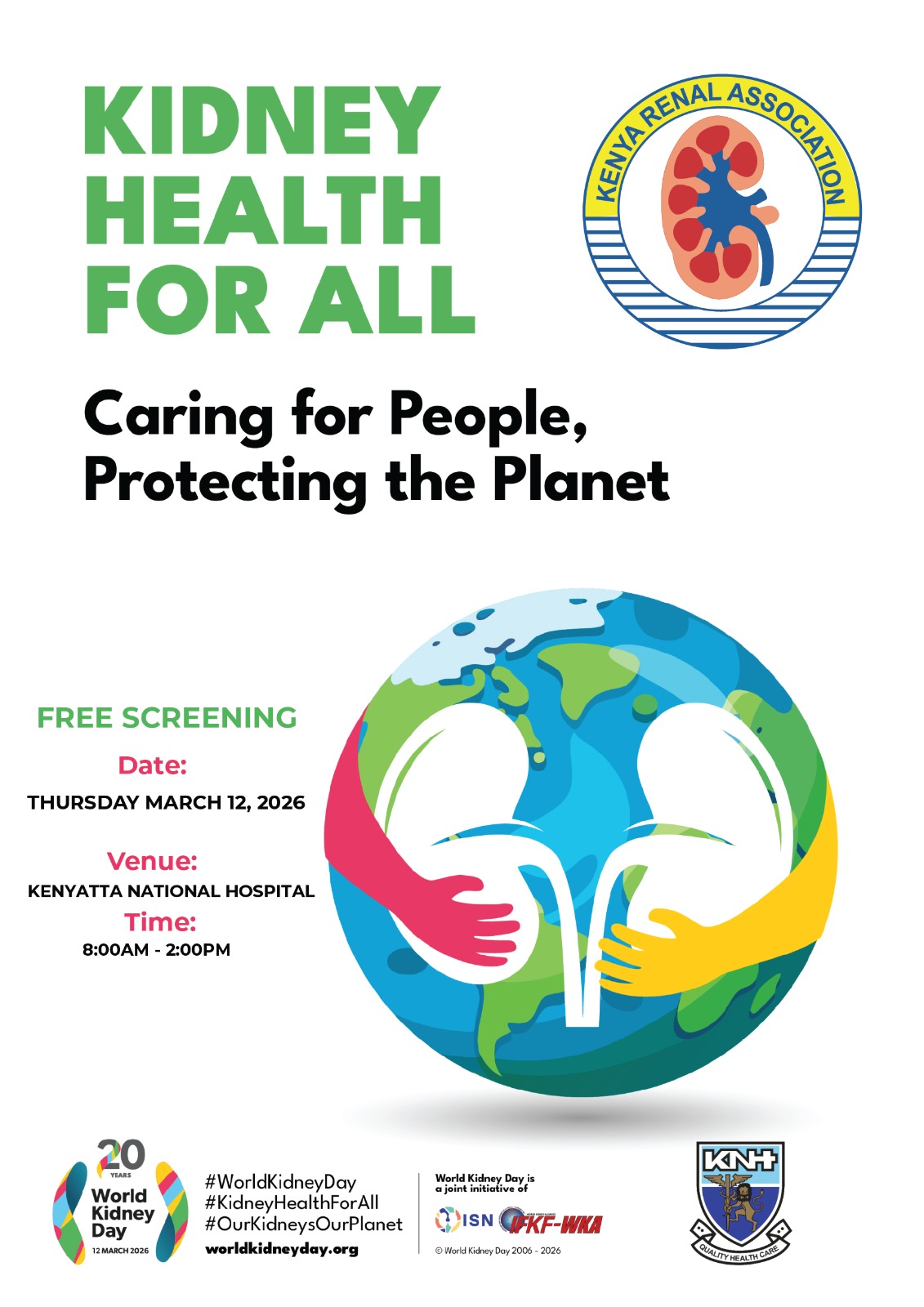
World Kidney Day is a joint initiative of the International Society of Nephrology (ISN) and the International Federation of Kidney Foundations (IFKF) which aims to raise awareness about the importance of kidneys. In Kenya, world Kidney Day will be championed by the Kenya Renal Association (KRA) which is a professional body of Nephrologists.
World Kidney Day 2026 theme, “Kidney Health for All: Caring for People, Protecting the Planet,” underscores a powerful and timely message as Chronic kidney disease (CKD) has quietly become one of the world’s most pressing health challenges, affecting one in ten people globally [1]. Because it often develops without obvious symptoms, many individuals only discover the condition when serious damage has already occurred. As the disease progresses, it increases the risk of heart disease, limits daily functioning, and can ultimately lead to kidney failure, where survival depends on dialysis or transplantation. The impact is greatest among vulnerable and underserved populations, widening health and social inequalities.
The good news is that kidney disease does not have to be a silent killer. Early identification through simple, affordable blood and urine tests allows timely action that can delay or even prevent disease progression. Screening those at greatest risk—including people living with diabetes, high blood pressure, obesity, cardiovascular conditions, or with a family history of kidney disease—offers the greatest return. Community-based screening programs play a critical role in reaching underserved populations, preserving kidney function, and reducing dependence on costly, long-term treatments.
At the same time, environmental pressures are intensifying the kidney disease burden [2]. Rising temperatures, air pollution, dehydration, and extreme weather events place additional strain on kidney health and accelerate disease progression. Climate change is also expanding the spread of infections that damage the kidneys. Ironically, the treatment of advanced kidney failure—particularly dialysis—places a heavy load on the environment through high water and energy use, single-use plastics, and carbon emissions. This creates a harmful cycle in which kidney disease and environmental degradation fuel one another.
Momentum for change is growing. The World Health Organization has recently taken a historic step by adopting its first global resolution on kidney disease, formally recognizing kidney health as a public health priority and strengthening the global call for prevention, early diagnosis, fair access to treatment, and environmental risk reduction [3]
A Shared Responsibility: People, Equity, and the Planet
Building a healthier and more sustainable future for kidney care requires coordinated action across all sectors:
-
Shift the focus to prevention and early action by embedding kidney screening into routine care for high-risk groups, promoting healthy lifestyles, and strengthening public awareness to reduce avoidable progression to kidney failure.
-
Broaden access to kidney transplantation, particularly early and pre-emptive transplants, which offer better quality of life, lower long-term costs, and reduced environmental impact compared to long-term dialysis.
-
Reimagine dialysis sustainably by supporting home-based therapies, investing in low-impact technologies, reducing waste, and adopting energy- and water-efficient practices—without compromising patient safety or care quality.
-
Ensure patient-centered sustainability, targeting system inefficiencies rather than patient burden, and actively involving patients in the design of greener kidney care solutions.
-
Support practical solutions across all settings, especially in resource-limited contexts, through strong policy frameworks, innovative financing, partnerships, mobile services, and adaptable dialysis models.
In line with the World Kidney Day theme, “Kidney Health for All: Caring for People, Protecting the Planet,” our awareness activities this year will emphasize equitable access to kidney care, early detection, and the shared responsibility of protecting both human and environmental health. These efforts will be delivered through the following initiatives:
-
Free health screenings for blood pressure, blood sugar, body mass index, and urinalysis to promote early detection and prevention of kidney disease
-
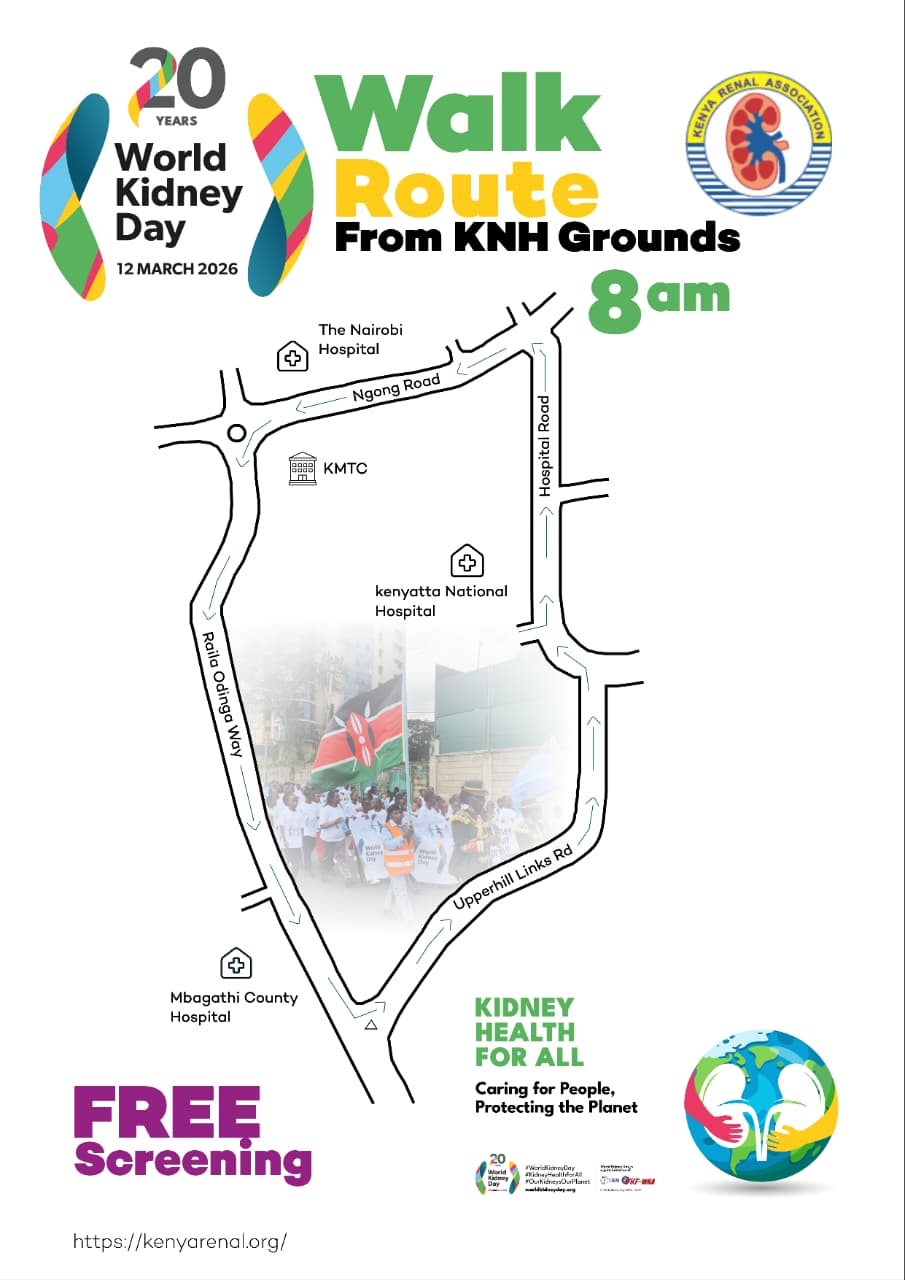
A kidney disease awareness walk to encourage healthy lifestyles, community engagement, and environmental consciousness
-
Free medical consultations and psychosocial support for people living with kidney disease, reinforcing compassionate, patient-centered care
-
Public lectures on kidney health, highlighting prevention, early detection, and the link between environmental factors and kidney disease
-
Educational webinars for healthcare workers focused on early diagnosis, equitable care, and sustainable kidney health practices
-
Television and radio interviews to amplify public messages on kidney health and environmental stewardship
-
Advocacy materials, including newspaper articles, banners, and T-shirts, to reinforce awareness and collective action
Protecting kidney health goes hand in hand with protecting our planet. Acting early, fairly, and sustainably will save lives today while securing kidney health for generations to come.
-
Kovesdy, C. P. (2022). Epidemiology of chronic kidney disease: An update 2022. Kidney International Supplements, 12(1), 7–11. https://doi.org/10.1016/j.kisu.2021.11.003
- Carrier, K., & Padilla, B. I. (2025). Environmental Contributors to Chronic Kidney Disease: A Screening and Prevention Agenda for Nurse Practitioners. The Journal for Nurse Practitioners, 21(9), 105512. https://doi.org/10.1016/j.nurpra.2025.105512
-
Reducing the burden of noncommunicable diseases through promotion of kidney health and strengthening prevention and control of kidney disease. (n.d.). Retrieved May 27, 2025, from https://apps.who.int/gb/ebwha/pdf_files/WHA78/A78_R6-en.pdf